Condition assessment
Review visible damage, moisture indicators, affected materials, and likely contributing conditions.
Contain. Remove. Correct.
IRP helps property owners identify affected areas, establish containment, remove materials that cannot be restored, clean the work area, control moisture, and rebuild damaged finishes.
Professional remediation scope
The correct scope depends on the affected materials, extent of growth, location, occupancy, and source of moisture.
Review visible damage, moisture indicators, affected materials, and likely contributing conditions.
Separate the work zone and control dust and debris migration during remediation.
Use appropriate filtration and work practices based on the project conditions.
Remove affected porous or deteriorated materials that cannot be effectively restored.
Clean remaining surfaces and the controlled work area following removal.
Coordinate repairs after remediation and moisture-source corrections are complete.
A controlled process
Identify affected areas and conditions that may be contributing to microbial growth.
Establish work-zone controls before disturbing affected building materials.
Remove, clean, dry, and document the agreed remediation scope.
Correct included moisture-related damage and restore removed finishes.
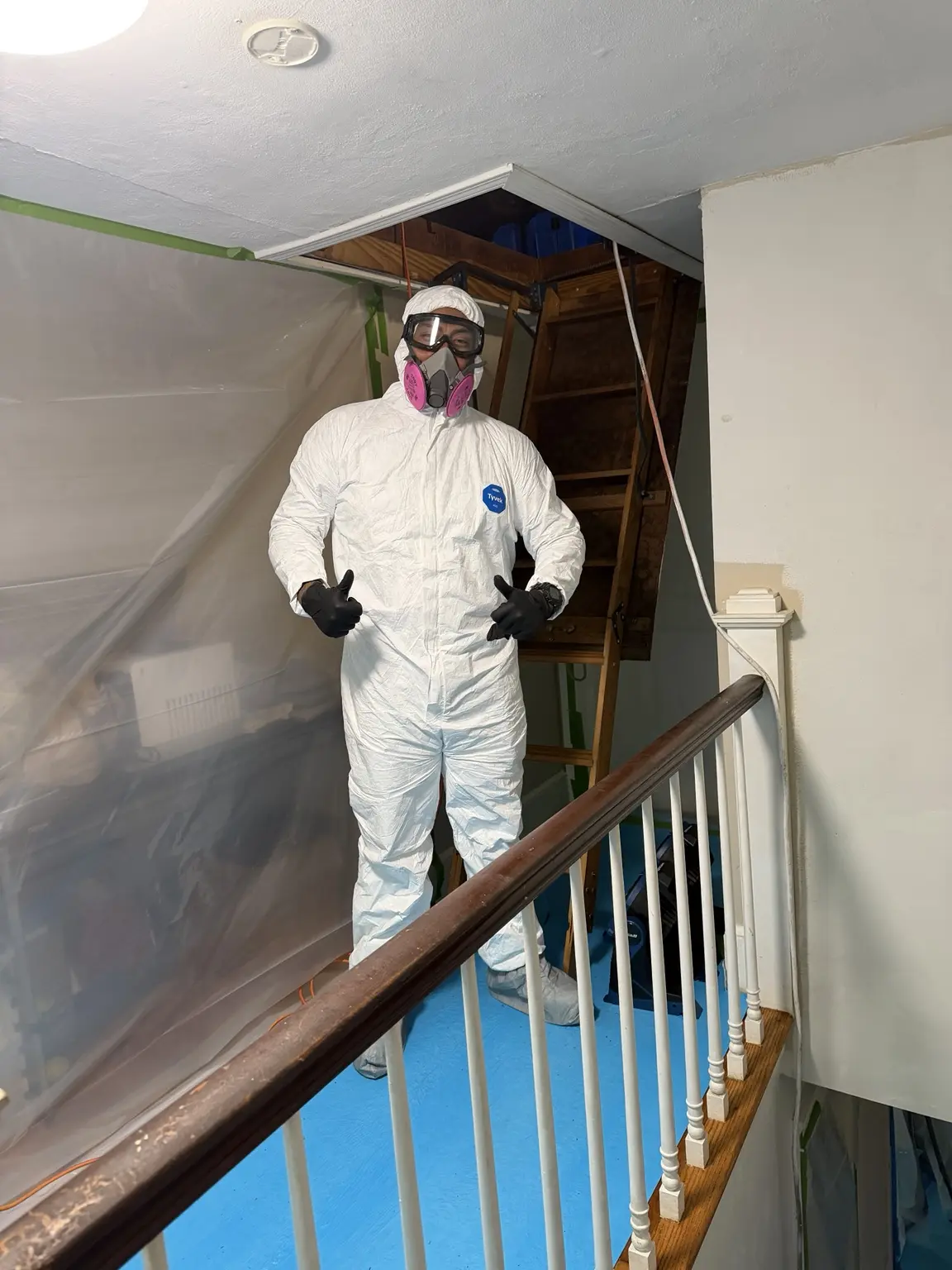
Recent Rhode Island project
See how IRP protected the surrounding area, established a supported plastic containment barrier, controlled access to the attic work zone, and used appropriate technician PPE.
Direct local answers
Useful answers for homeowners, landlords, property managers, and associations.
Ask IRP directly →Immediate Restoration Pros LLC provides mold remediation, containment, affected-material removal, detailed cleaning, moisture control, and reconstruction throughout Rhode Island and nearby Massachusetts.
Mold is commonly discovered in attics, basements, bathrooms, wall cavities, beneath flooring, around windows, and in areas affected by roof, plumbing, drainage, or humidity problems.
The moisture source must be identified and corrected for long-term results. IRP evaluates visible conditions and can coordinate repairs within the agreed project scope.
Yes. IRP can coordinate removal, cleaning, drying, and reconstruction, including insulation, drywall, flooring, trim, painting, roofing, siding, and carpentry where included.
Painting over visible growth does not address affected materials or the moisture conditions supporting it. The correct approach depends on the material, extent, location, and moisture source.
Immediate Restoration Pros